
Isarel-Gaza War
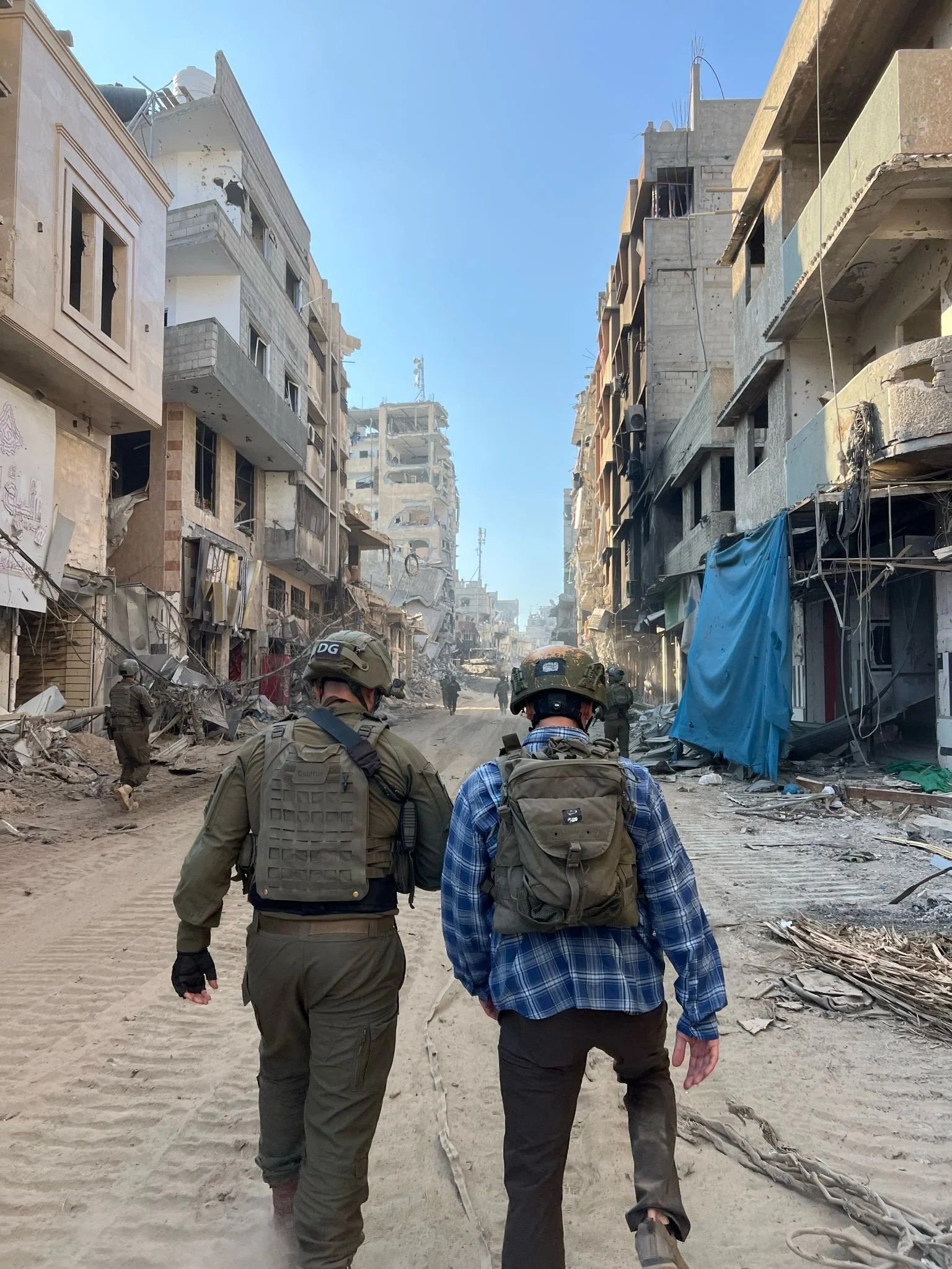
The Israel-Gaza War has generated extensive reporting and public debate, yet understanding how the war was fought requires detailed research on the ground and direct engagement with its participants. Madison Policy Forum supports field research led by John Spencer to collect primary-source evidence and examine the conduct of the war, particularly the challenges of urban and underground warfare. Drawing on eight research trips to Israel and Gaza and more than one hundred interviews with military leaders and soldiers, this research documents battlefield challenges and the adaptations developed during combat. The resulting studies seek to preserve lessons that might otherwise be lost and provide a more informed basis for military education, policy discussions, and U.S. and allied preparations for future conflicts.
Articles:
“Learning to Learn: Lessons for the U.S. Army From Israel Defense Forces’
Wartime Adaption,” Modern War Institute, May 21, 2025
Drawing on field research in Israel and Gaza, this article examines how the Israel Defense Forces developed a system to identify and share battlefield lessons while combat was ongoing. Dedicated learning officers embedded with frontline units helped turn observations into changes in tactics within hours, supported by printed briefs and digital communications. The article identifies lessons for the U.S. Army in making rapid adaptation a permanent part of combat operations.
“How Israeli Military Technology Continues to Improve the US Military,” The
Institute for National Security Studies (INSS), April 27, 2025 (coauthored)
The U.S. military has long drawn lessons from Israel’s battlefield experience and adopted technologies developed in response to its security challenges. This article traces that relationship from American studies of the 1973 Yom Kippur War to the integration of Israeli innovations into U.S. military equipment and battlefield medicine. It examines the practical benefits of defense cooperation and the continuing opportunities for Israeli experience to inform American military capabilities.
“The Dogs of (Urban) War: Lessons from Oketz, The Israel Defense Forces’
Specialized Canine Unit,” Modern War Institute, January 1, 2025
Israel’s specialized canine unit, Oketz, played an important role in detecting explosives and locating concealed fighters during operations in Gaza, including inside tunnels. This article examines how the unit combined specialized training with cameras and remote commands to reduce risks to soldiers. Its experience offers lessons for U.S. military working dog programs, including how to sustain a larger canine force during prolonged combat and support the welfare of dogs and their handlers.
“Israel’s New Approach to Tunnels: A Paradigm Shift in Underground Warfare,”
Modern War Institute, December 2, 2024
The scale and complexity of Hamas’s tunnel networks forced Israeli forces to reconsider how they approached underground warfare. Based on field research and interviews with Israeli commanders, this article traces the shift from avoiding tunnels or treating them as obstacles to conducting coordinated operations above and below ground. It examines how the 98th Division developed this approach in Khan Yunis and considers its implications for military training and doctrine.
“Gaza’s Underground: Hamas’s Entire Politico-Military Strategy Rests on Its
Tunnels,” Modern War Institute, January 18, 2024
Hamas’s tunnel networks provided protected movement and shelter while serving a broader strategy for prolonging the war. This article examines how embedding military infrastructure beneath populated areas complicated Israeli operations and increased the civilian consequences of destroying that infrastructure. It argues that Hamas designed its underground networks to preserve its forces and gain time for international pressure to bring Israel’s campaign to a halt.
“Underground Nightmare: Hamas Tunnels and the Wicked Problem Facing the
IDF,” Modern War Institute, October 17, 2023
Published before Israel’s ground campaign began, this article examines why Hamas’s extensive tunnel networks would present one of the most difficult challenges facing Israeli forces. Drawing on historical examples of underground warfare, it explains how tunnels could protect Hamas fighters and enable surprise attacks behind advancing units. The analysis also details the limitations of conventional military equipment underground and the specialized capabilities required to operate in these environments.
“These are the Challenges Awaiting Israeli Ground Forces in Gaza,” Modern
War Institute, October 11, 2023
Written four days after the October 7 attacks, this article assesses the challenges Israeli ground forces were likely to encounter in Gaza. It draws on previous Israeli operations and other modern urban battles to examine Hamas’s prepared defenses, including tunnels, drones, antitank weapons, and fortified buildings. The analysis places these threats within the wider demands of protecting civilians and sustaining a prolonged urban campaign under growing international pressure.